
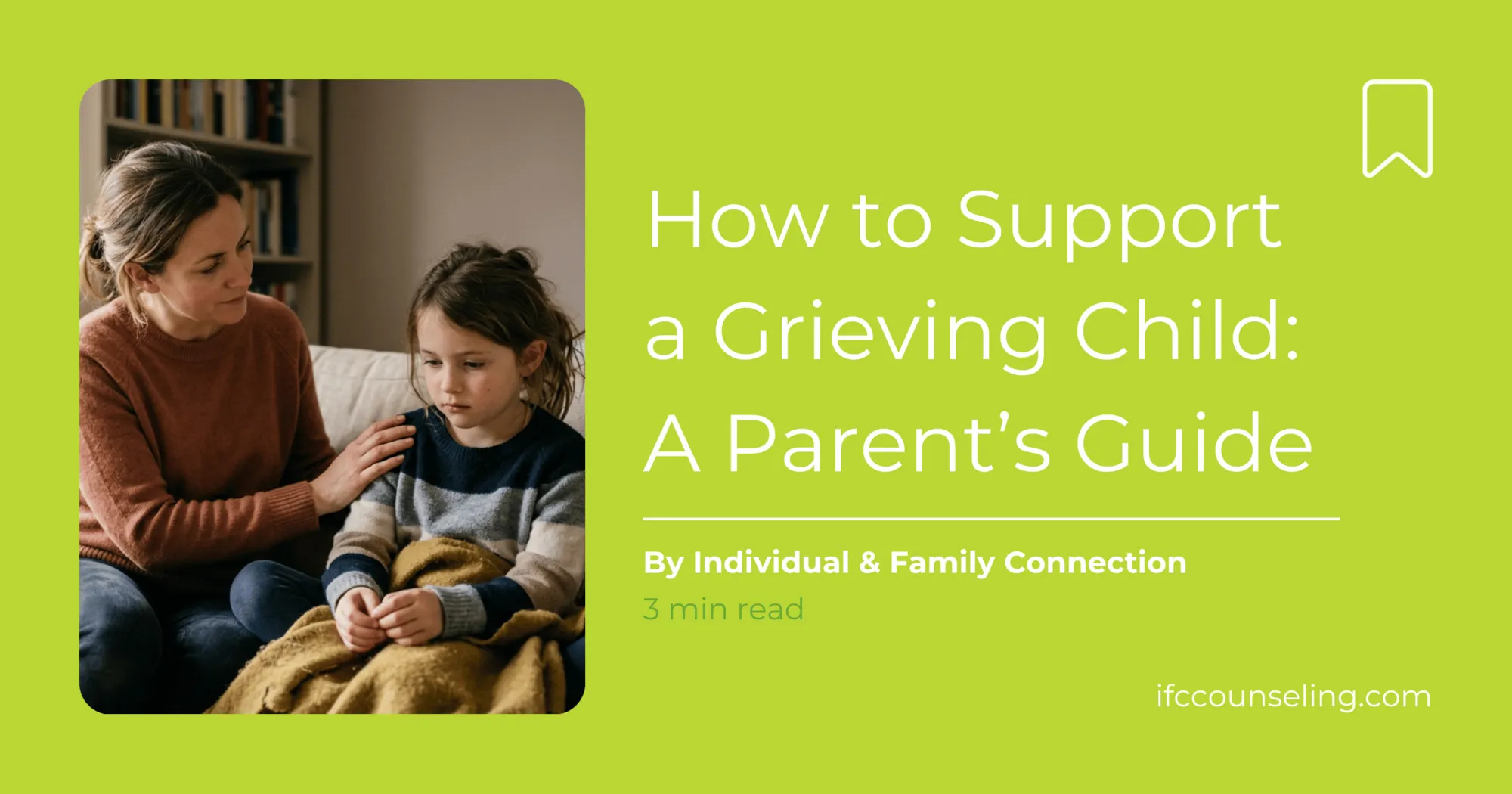
If your child is experiencing grief, you may feel at a loss for what to say or do. This guide, written by IFC’s pediatric therapists, offers practical, compassionate support to help your child navigate loss—while taking care of yourself, too.
Grief is normal — and it looks different in every child
Grief is a natural response to death and loss. Many parents worry when their child swings between deep sadness and ordinary play — but this is actually healthy. Kids may also become more irritable, have trouble concentrating, or temporarily regress developmentally. These responses don’t mean something is wrong; they mean your child is processing something hard.
There is no right or wrong way to grieve, and the grieving process is not linear. Your most important role is to remain a steady, supportive presence.
Meet your child where they are developmentally
A child’s understanding of death changes as they grow:
- Young children may not grasp the permanence of death and might expect the person to return
- School-age children often worry they somehow caused the death or could have prevented it
- Teenagers tend to wrestle with existential questions about life, meaning, and mortality
Understanding where your child is developmentally helps you give them accurate, age-appropriate information and the right kind of support.
Use honest, clear language
Children need honest, age-appropriate information to understand what has happened. Use clear, factual language when explaining death. Avoid euphemisms like “they went to sleep” or “we lost them” — these can create confusion or fear. When kids understand the reality of the situation, they are better able to process their feelings and begin to cope.
Resist the urge to “fix” their grief
It can be tempting to offer quick comfort — phrases like “everything happens for a reason” or “they’re in a better place” feel helpful, but can unintentionally dismiss what your child is feeling.
Instead, focus on creating space for your child to express whatever emotions come up: sadness, anger, confusion, relief, numbness, or all of the above.
It’s okay to not have all the answers. Simply saying “I don’t know, and I’m sad too” is enough.
It’s also okay — and genuinely helpful — for your child to see your own grief. Modeling healthy emotional expression teaches children that their feelings are acceptable and manageable.
Don’t place a timeline on grief
Avoid expectations for your child to “get over it” as time passes. Grief doesn’t follow a schedule. Loss can resurface acutely around birthdays, anniversaries, and holidays — sometimes years later. Make space for ongoing emotional expression rather than treating grief as something to move past.
Honor the person who died
Helping your child maintain a sense of connection to the person they lost is one of the most meaningful things you can do. This might look like:
- Sharing stories and memories together
- Celebrating their birthday each year
- Continuing a tradition they loved
- Engaging in activities they enjoyed
- Practicing values they embodied in everyday life
Grief doesn’t require forgetting — it’s about learning to carry the relationship in a new way.
When to seek professional support
If your child’s sadness or distress persists for many days, or if it significantly interferes with eating, sleeping, school, or friendships, it may be time to reach out to a therapist or school counselor.
IFC is here to help
IFC’s clinicians specialize in pediatric mental health and parent coaching. If your child — or your family as a whole — is navigating loss, we’d be honored to support you.