
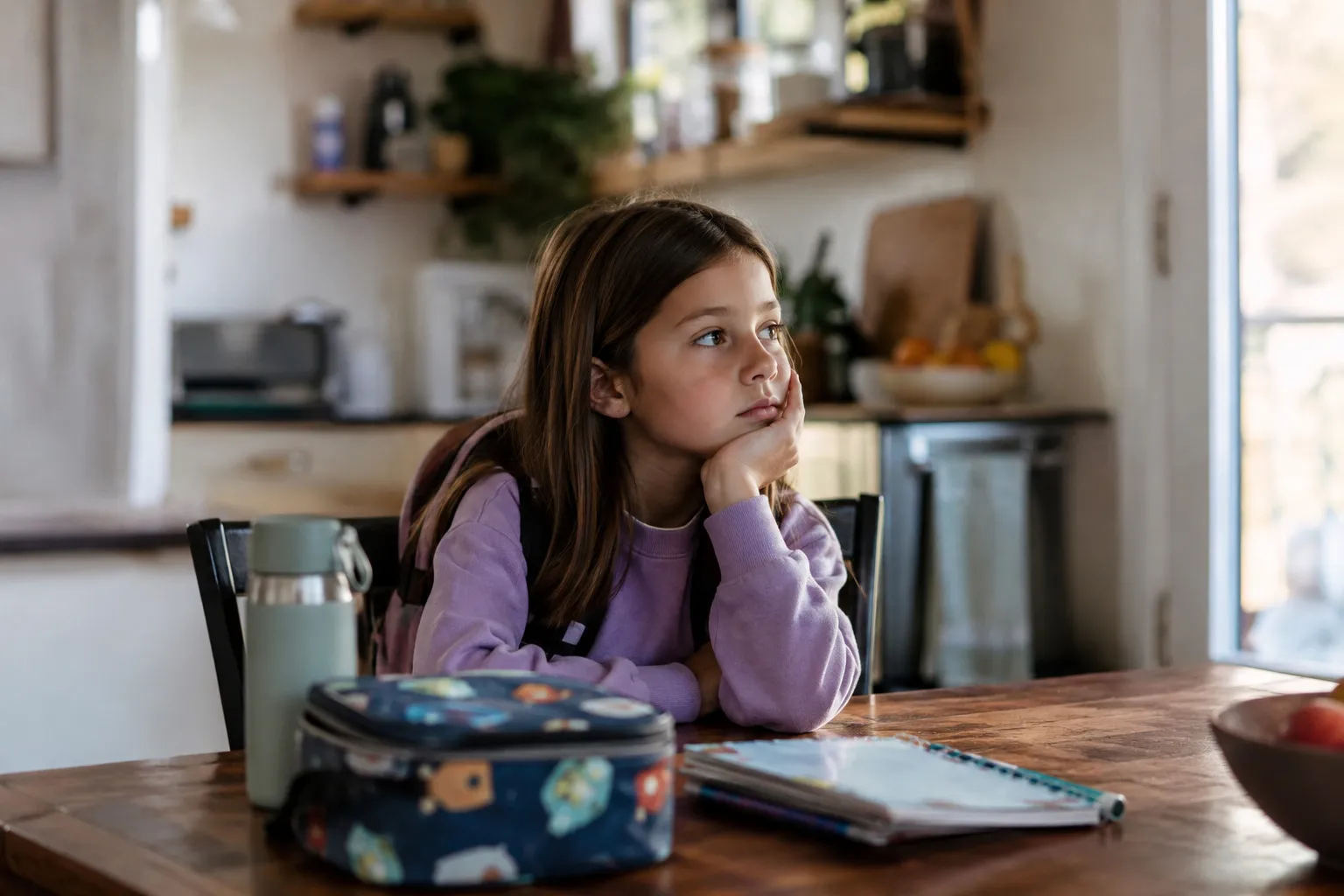
For some families, the hardest part of back-to-school doesn’t happen on the first day. It happens a few weeks later.
The new backpack has already been used. The first-day pictures have been taken. Kids know where their classrooms are, parents have figured out the drop-off routine, and everyone is supposedly “back into the swing of things.”
Except sometimes, they aren’t.
A few weeks into the school year, parents may start hearing things like, “I don’t want to go to school,” or “I hate school.” Mornings that initially went smoothly can suddenly become a struggle. Kids may complain about stomachaches or headaches, have difficulty falling asleep, become more irritable at home, or completely fall apart after getting through the school day.
For parents, this can be confusing. If your child made it through the first few weeks, shouldn’t things be getting easier by now?
Not necessarily.
The Transition Back to School Can Take Time
Starting a new school year asks a lot of kids at once.
They are adjusting to new teachers, classmates, expectations, schedules, homework, extracurricular activities, and social dynamics. Even familiar parts of school can feel different from one year to the next.
During the first few days, novelty and excitement can sometimes carry kids through. As the weeks progress, however, the workload starts to increase, routines become more demanding, and the reality of being back in school five days a week sets in.
For some kids, this is when anxiety becomes more noticeable.
That doesn’t automatically mean something is seriously wrong. Transitions take time, and kids differ significantly in how quickly they adjust. Instead of focusing on whether your child “should be used to it by now,” it can be more helpful to pay attention to what they are communicating and how much their distress is interfering with everyday life.
Anxiety Doesn’t Always Look Like Anxiety
When adults think about an anxious child, we often imagine a child saying, “I’m nervous,” “I’m scared,” or “I’m worried.”
Sometimes kids do exactly that. Often, they don’t.
Back-to-school anxiety might look like:
- Stomachaches or headaches before school
- Difficulty falling asleep, especially on school nights
- Increased irritability or emotional outbursts
- Frequent reassurance-seeking
- Perfectionism or excessive worry about assignments and grades
- Becoming unusually quiet or withdrawn
- Meltdowns after getting home from school
- Increased conflict around homework
- Repeatedly asking to stay home
- Suddenly saying they “hate school” without being able to explain exactly why
This is one reason curiosity can be more useful than immediately trying to solve the problem.
Instead of assuming you know what is making school difficult, try to figure out what part of the experience feels hardest.
Is it separating from you in the morning? A difficult class? Feeling overwhelmed by homework? Worrying about making mistakes? Navigating friendships? Lunchtime? Riding the bus? Feeling exhausted by the end of the day?
“I hate school” can mean a lot of different things.
Finding out what is underneath it gives you a much better idea of how to help.
Validate the Feeling Without Reinforcing Avoidance
When your child is distressed, it is natural to want to make that feeling disappear.
Parents might respond with, “There’s nothing to worry about,” “You’re going to be fine,” or “School isn’t that bad.”
The intention is reassuring, but anxious kids do not always experience those statements as reassuring. Sometimes they hear them as, “I shouldn’t be feeling this way.”
Validation does not mean agreeing that the feared situation is dangerous or allowing anxiety to make every decision. It simply means acknowledging that the feeling is real.
You might say:
- “I can tell school feels really hard this morning.”
- “I know you’re nervous about that test.”
- “It sounds like lunch has been stressful lately.”
Then, pair that validation with confidence in your child’s ability to cope:
“I know this is hard, and I also know you can get through today.”
The goal is not to convince your child that they should never feel anxious. It is to help them learn that they can experience anxiety and still do difficult things.
Make Mornings Predictable
When school mornings are already stressful, too many decisions and negotiations can make things even harder.
Predictability can help.
Preparing clothes, backpacks, lunches, or other school items the night before can reduce the number of things everyone has to think about in the morning. A consistent wake-up time and morning routine can also help kids know what comes next.
When possible, offer small, manageable choices rather than open-ended ones.
“Do you want the blue shirt or the green shirt?” is easier to navigate than “What do you want to wear?”
The goal is not to create a perfect morning routine. It is to make mornings predictable enough that anxiety has fewer opportunities to take over.
Remember That Some Kids Fall Apart Where They Feel Safest
One of the most confusing things parents can hear a few weeks into the school year is, “They’re doing great at school!”
Meanwhile, the child who is apparently doing great walks through the front door and completely melts down.
These two things can both be true.
Some kids work incredibly hard to manage their emotions, follow directions, navigate friendships, complete assignments, and meet expectations throughout the school day. By the time they get home, they are exhausted.
Home is often where they finally let everything out.
If your child consistently struggles immediately after school, consider experimenting with a decompression period before asking about homework, chores, or what happened during their day.
Some kids want to talk immediately. Others need a snack, movement, music, quiet time, or twenty minutes alone before they are ready to engage.
There is no single correct after-school routine. Pay attention to what helps your child reset.
Look for Patterns Instead of Focusing on One Bad Day
Everyone has bad school days. A difficult morning or rough Sunday night doesn’t necessarily mean your child is struggling with the transition overall.
What becomes more useful is noticing patterns over time.
Maybe Sunday nights consistently bring stomachaches. Maybe your child struggles most on days when they have math. Maybe mornings are fine until it is time to leave the house. Maybe the distress started after a friendship changed. Maybe homework is turning every evening into a battle.
Patterns provide information.
Instead of asking only, “Why don’t you want to go to school?” try getting more specific:
- “What part of tomorrow are you least excited about?”
- “When during the school day do you feel the most stressed?”
- “What part of school feels easiest right now?”
- “If you could change one thing about your school day, what would it be?”
Kids may not always have an immediate answer. That is okay. The goal is to create space for the conversation rather than forcing one.
Is Your Child Still Adjusting—or Is It Time for Additional Support?
Some anxiety during a transition is normal, and there is no specific point in the school year when every child should suddenly feel comfortable.
Rather than focusing on how many weeks have passed, pay attention to whether your child’s anxiety is persistent or worsening and how much it is interfering with everyday life.
Consider reaching out for additional support if anxiety is significantly affecting things like:
- School attendance
- Sleep
- Eating
- Friendships
- Academic functioning
- Family relationships
- Participation in activities they normally enjoy
You can also communicate with your child’s teacher, school social worker, counselor, pediatrician, or therapist to get a fuller picture of what is happening.
Sometimes relatively small changes can make school feel much more manageable. Other times, a child may benefit from more structured support in learning how to understand and cope with anxiety.
Adjustment Doesn’t Have a Deadline
There is no rule that says kids should feel completely comfortable at school by the end of the first week—or even the first month.
For some children, adjusting takes longer.
Parents do not need to eliminate every uncomfortable feeling or solve every difficult school day. Often, the most helpful thing you can do is stay curious, create predictability where you can, acknowledge what your child is feeling, and communicate confidence that they can handle difficult moments.
The goal is not a child who never feels anxious about school.
It is a child who gradually learns, “I can feel anxious, I can ask for help, and I can still get through this.”
If school-related anxiety continues to interfere with your child’s daily life, additional support can help you better understand what may be driving it and identify strategies that fit your child and family. IFC Counseling works with children, teens, young adults, and families throughout the Chicago area. Contact us to learn more about how we can help.