
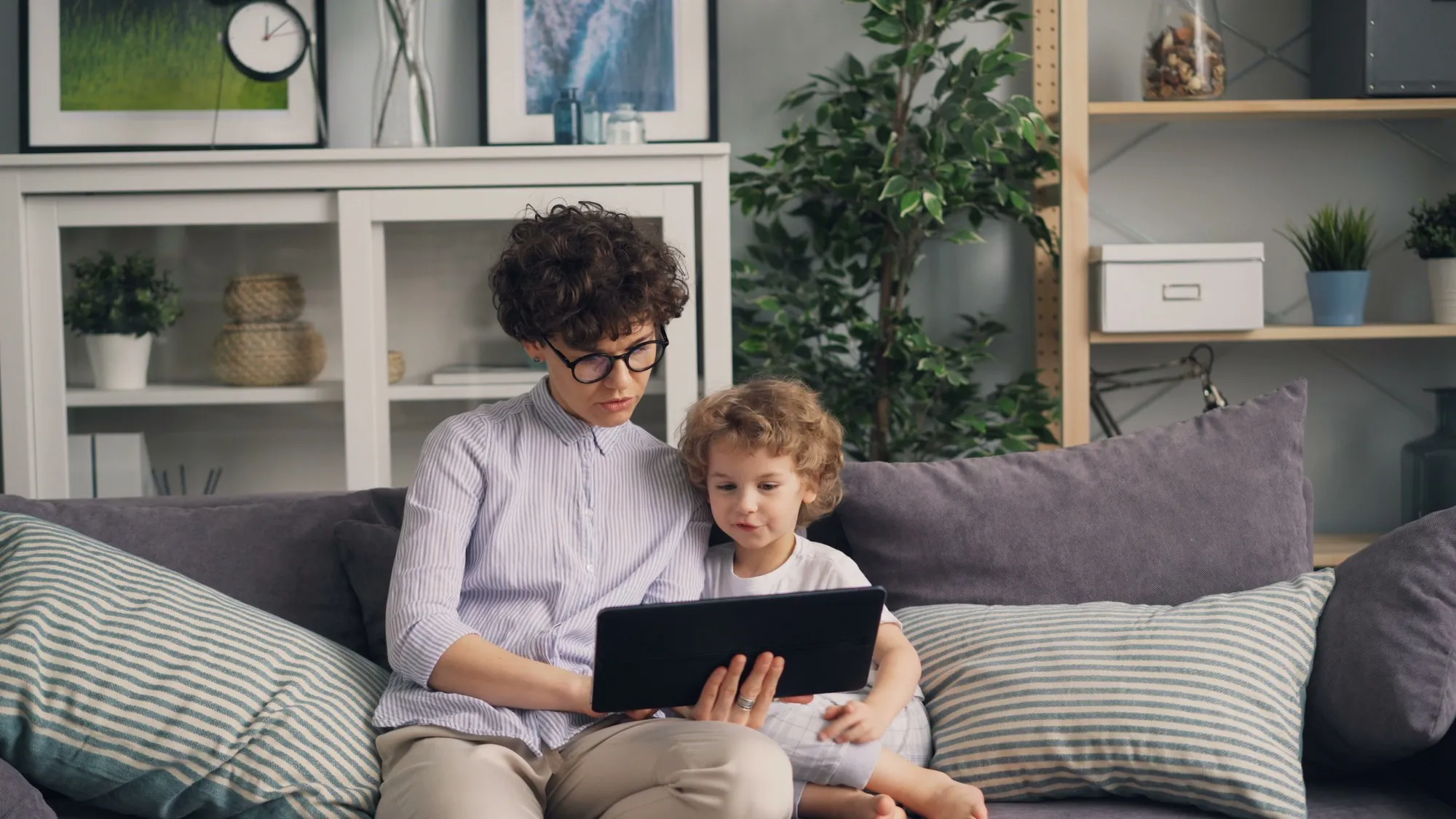
How much screen time is too much? Here’s a better question to ask.
Every few weeks, it seems like there’s another headline about screen time. One article warns that phones are increasing anxiety. Another says social media is hurting self-esteem or that video games are changing the way children’s brains develop.
It’s enough to make any parent wonder whether allowing an extra episode after school or another half hour of Minecraft is somehow doing lasting damage.
If you’ve found yourself asking, “Am I getting this wrong?” you’re not alone. It’s one of the most common questions parents ask us.
The challenge is that, while it’s a completely understandable question, “How much screen time is too much?” isn’t always the most helpful one.
Instead, we often find ourselves asking something different: What role is technology playing in this child’s life?
That shift in perspective can tell us much more than simply looking at the number of hours on a screen.
Looking Beyond the Screen
One thing working with children teaches us is that behavior usually makes sense once we understand what it’s accomplishing. That doesn’t mean every behavior is healthy, but it does mean there’s almost always a reason behind it. Screen use is no different.
Imagine two twelve-year-olds who each spend three hours playing video games after school. On paper, their screen time looks identical. But one child is laughing with friends online after soccer practice before heading downstairs for dinner. The other is alone in their room, avoiding homework, staying up until 2 a.m., and withdrawing from family.
Same amount of screen time. Two completely different stories.
Sometimes the screen is the problem. Sometimes it’s the symptom. And sometimes it’s neither. Research continues to show that the relationship between technology and mental health is more nuanced than many headlines suggest — the type of content children engage with, what screen use may be replacing, the quality of their relationships, and how technology fits into the rest of their lives all play a role in their well-being.
Let’s also acknowledge something that doesn’t get said often enough: parenting is exhausting. Sometimes the tablet buys you twenty minutes to make dinner. Sometimes Bluey gives you enough time to take a shower. Sometimes a family movie night is exactly what everyone needs after a difficult week.
Screens can absolutely be part of a healthy family life, and none of those moments make you a bad parent. Most children don’t benefit from parents striving for perfection — they benefit from parents who stay engaged, pay attention, and are willing to adjust when something no longer seems to be working.
When Should Parents Be Concerned?
It’s worth paying closer attention when screens begin replacing the things children need to thrive, like:
- Healthy sleep
- Physical activity
- Face-to-face relationships and family time
- School responsibilities
- Opportunities to build frustration tolerance and problem-solving skills
You might also notice your child becoming unusually distressed when it’s time to put a device away, losing interest in activities they once enjoyed, or relying on screens as their primary way of coping with difficult emotions.
Rather than viewing these moments as evidence that screens themselves are the problem, we encourage parents to see them as an invitation to get curious: What is your child getting from technology that they’re struggling to find somewhere else?
Sometimes the answer is entertainment. Sometimes it’s connection. Sometimes it’s a sense of competence. Sometimes it’s an escape from stress, loneliness, or anxiety.
The answer matters, because different needs call for different responses. A child who is overwhelmed needs something different than a child who is bored. A child who is lonely needs something different than a child who is avoiding responsibility. Understanding the need behind the behavior helps us choose a response that’s more likely to help.
The Curiosity Test
The next time your child reaches for a screen, resist the urge to immediately check the screen-time report or focus on how many minutes they’ve been online. Instead, pause and ask yourself:
- What need might this be meeting?
- What happened right before they picked it up?
- What are they doing while they’re on it?
- How do they seem afterward?
Those questions won’t always give you immediate answers, but they’ll often tell you much more than the timer on the screen. Curiosity doesn’t mean ignoring unhealthy behavior — it simply means making sure we understand it before we decide how to respond.
Connection Before Correction
When parents become worried about screen time, it’s understandable to focus on limits and consequences first. Boundaries are important, and children benefit from predictable expectations around technology.
At the same time, we don’t want the conversation to end there. Before jumping straight to “Turn it off,” consider asking questions like:
- “What do you enjoy most about this game?”
- “Who are you talking to when you’re online?”
- “How do you usually feel after you’ve been on your phone for a while?”
- “If you couldn’t use your tablet today, what would be the hardest part?”
Questions like these communicate something powerful: I’m interested in understanding your experience. That sense of connection often creates more opportunities for meaningful conversations than conflict alone.
Progress Over Perfection
There isn’t a perfect formula for raising children in a digital world, and technology isn’t going away. Our goal isn’t to raise children who never use screens — it’s to help them build a healthy relationship with technology, where screens add to their lives rather than replace the experiences that help them grow.
Staying curious, maintaining open communication, and remaining connected to your child will almost always matter more than chasing the “perfect” number of daily screen-time hours.
The technology our children use will keep changing. New apps will appear, old ones will disappear, and today’s favorite game will eventually be replaced by something else. One thing is unlikely to change: children thrive when they feel understood by the adults who care about them.
If screen time becomes an opportunity to better understand your child’s world instead of simply something to manage, you’re already asking one of the most important questions a parent can ask.
Not sure where to start?
If you’d like support working through screen time, boundaries, or any other parenting challenge, our Parent Coaching program is designed to give you practical, personalized guidance.